Reflection by: Alberto Bueno, T.O.R.
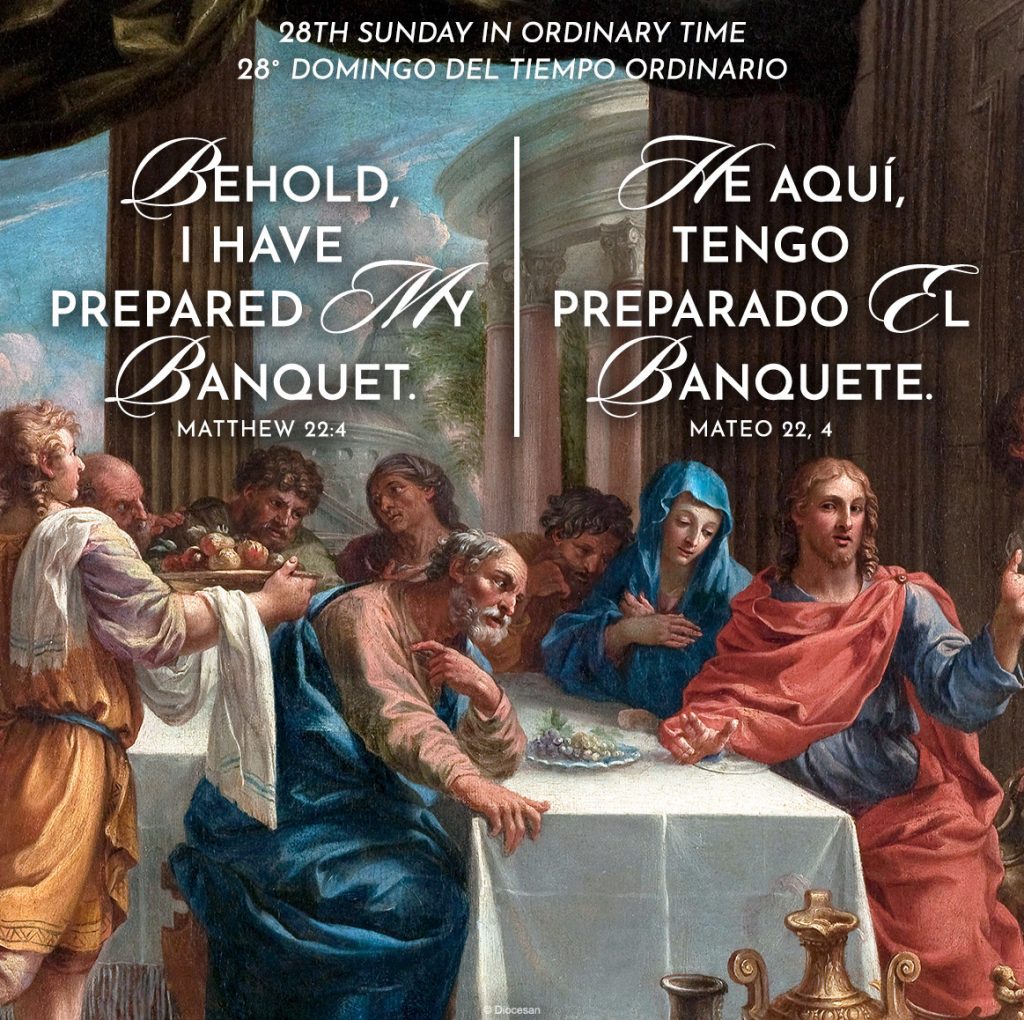
In our Scriptures today, sisters and brothers, we are presented with the image of a banquet, representing the kingdom of God. This is true for both the Old and the New Testaments. Thus, we see in our reading from Isaiah (25:6-10a) a beautiful picture of the feast that God prepares on his holy mountain, a cause to rejoice and be glad for God’s salvation. The parable of Jesus today about a king who hosts a wedding banquet for his son is similar. The invited guests, however, choose not to accept their invitation, and the king then “throws open the doors” to anyone who will come. God desires his eschatological banquet to be as well-attended as possible. All are invited; none are excluded. Even if we accept the initial invitation, if we do not enter with a “wedding garment”, that is, a prepared heart, we will not be permitted to stay at the feast. Metaphorically speaking, this wedding garment represents, as St. Paul writes in a number of his letters, taking on the attitude of Christ, becoming like him (cf. Col 3:12; Rom 13:14; Gal 3:27). Matthew would have all the guests clothe themselves with good deeds and faithfulness, ready for the banquet. More is needed than just showing up. The generosity of God’s offer is overwhelming, all-encompassing! God even provides the “wedding garment”, Christ himself. We are to put on Christ, or, if you will, become Christ for others. Then we will be richly attired for the banquet of God’s kingdom, the wedding feast of the Lamb.
En las Escrituras de hoy, hermanas y hermanos, se nos presenta la imagen de un banquete que representa el Reino de Dios. Esto es válido tanto para el Antiguo como para el Nuevo Testamento. Así, vemos en nuestra lectura de Isaías (25, 6-10a) una hermosa imagen del banquete que Dios prepara en su monte santo, motivo para regocijarse y alegrarse por la salvación de Dios. La parábola de Jesús de hoy, sobre un rey que ofrece un banquete de bodas para su hijo, es semejante. Los invitados, sin embargo, deciden no aceptar la invitación, y entonces el rey «abre de par en par las puertas» a cualquiera que quiera asistir. Dios desea que su banquete escatológico cuente con la mayor asistencia posible. Todos están invitados; nadie queda excluido. Aun si aceptamos la invitación inicial, si no entramos con el «traje de boda» —es decir, un corazón preparado—, no se nos permitirá permanecer en el banquete. En sentido metafórico, este traje de boda representa —como escribe san Pablo en varias de sus cartas— asumir la actitud de Cristo, llegar a ser como él (cf. Col 3, 12; Rom 13, 14; Gál 3, 27). Mateo querría que todos los invitados se revistieran de buenas obras y fidelidad, listos para el banquete. Se necesita más que simplemente presentarse. ¡La generosidad de la oferta de Dios es abrumadora y lo abarca todo! Dios incluso provee el «traje de boda»: Cristo mismo. Hemos de revestirnos de Cristo o, si se quiere, convertirnos en Cristo para los demás. Entonces estaremos ricamente ataviados para el banquete del Reino de Dios, la fiesta de bodas del Cordero.